

A note from Jen — I love every shape and motif in this room: the Panama Wounaan pieces so detailed they take months and sometimes years, the wavy forms that refuse to sit still. Every one is one of one. They are all a joy to look at. I hope one stops you the way they stop me.
Ĥu hajim — thank you, from the Wounaan · ❤️ Jen at RFB Woven Art
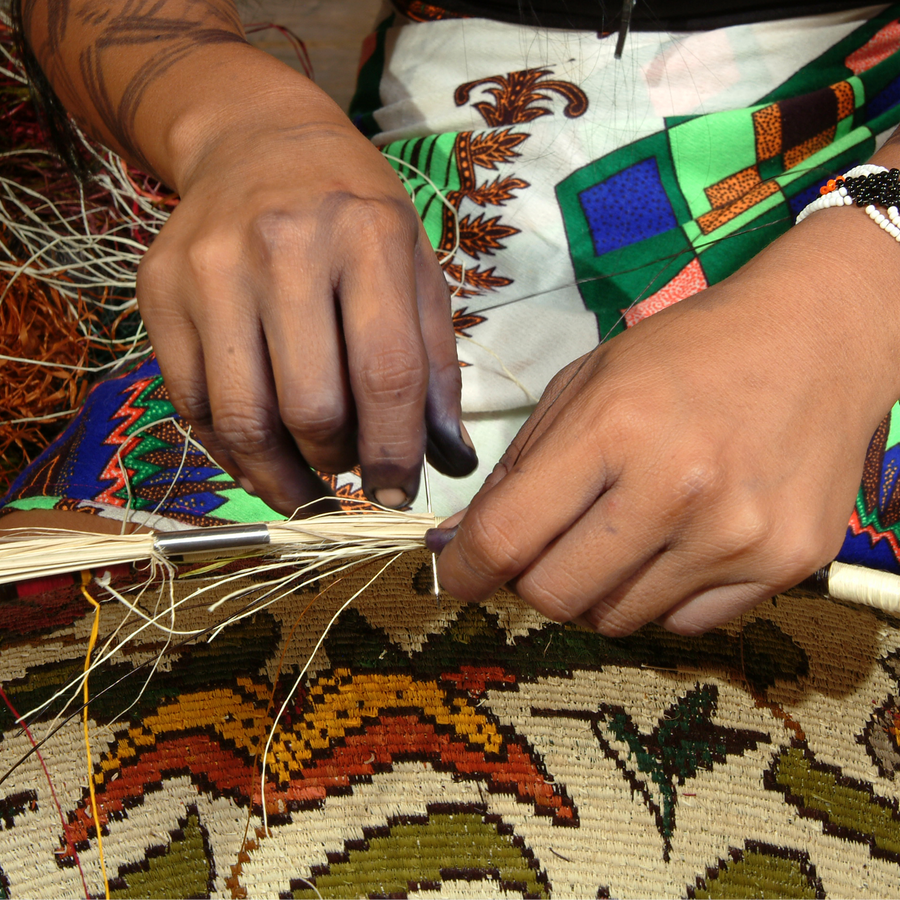
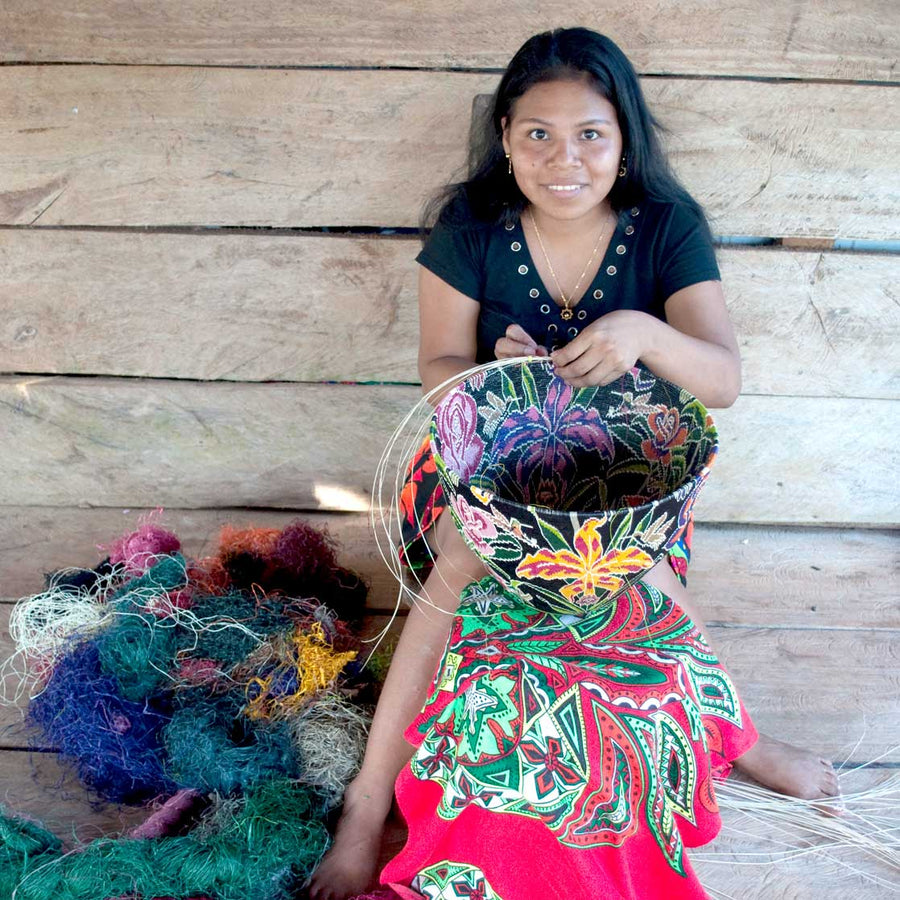
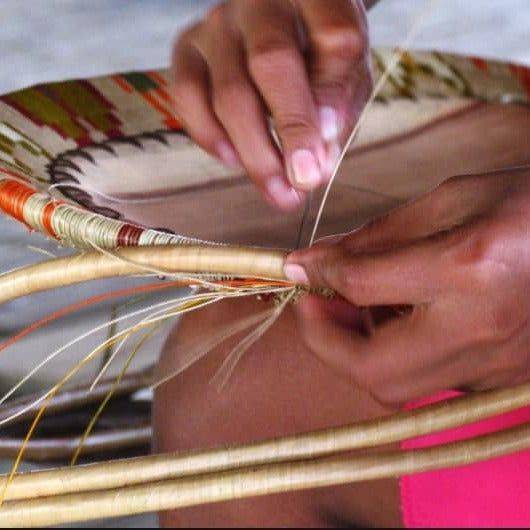


Handwoven baskets from six Indigenous traditions across Panama, Colombia, Ghana, and Rwanda. Every piece here was made entirely by hand from natural fibers. I buy directly from the weavers themselves and through their cooperative and tribal representatives, so each basket comes with its story intact. You'll find ultra-fine Wounaan coil baskets, bold Colombian werregue, sculptural elephant grass forms from Ghana, and tall Rwandan Agaseke peace baskets.
No two baskets are identical. Materials, dyes, and patterns change with each weaver, each season, and each place.
Most pieces run from $85 for mini Wounaan baskets up to $6,240 for large collector works. The one exception is a $20,000 Wounaan masterwork that took a single artisan eight years to weave. Tall Rwandan Agaseke towers start at about $1,000. Shipping is free in the continental US, orders go out within 1 to 3 business days, and returns are accepted within 14 days of delivery. Once a basket sells, it's gone. I never restock.
Commonly Asked
Every basket is handwoven by Indigenous artisans. The Wounaan and Emberá weave in Panama and Colombia using palm fiber and natural vegetal dyes. The Frafra weavers of Ghana's Upper East Region shape elephant grass into sculptural wave forms. In Rwanda, cooperatives led by Gahaya Links coil hand-dyed sisal over sweetgrass with an inner bamboo framework. I buy directly from the weavers and their cooperative representatives, so each piece comes with its origin and its maker's name when I have it.
No. Every piece is one of one. The materials, dyes, and patterns shift with each weaver, each season, and each place. Once a basket sells, it is gone. I never restock because no two baskets are identical.
Materials vary by tradition. Panama Wounaan baskets are coiled from the most supple fibers of the chunga palm (Astrocaryum standleyanum) over a core of nahuala (Carludovica palmata), dyed with seeds, roots, and fruits. Colombian werregue baskets use naturally dyed werregue palm fiber from the Chocó, sometimes accented with copper coils. Ghanaian baskets are woven from elephant grass, shaped into wave forms while the grass is still moist. Rwandan Agaseke use hand-dyed sisal over coiled sweetgrass. A fine Wounaan basket can take months or years to complete. Ghanaian and Rwandan pieces range from days to weeks depending on size and detail.
Yes. Fine Wounaan baskets are collected alongside ceramics and textiles as Indigenous contemporary art. Galleries, museums, and private collectors value them for their precision, cultural depth, and the fact that each one is unrepeatable. The tall Rwandan Agaseke appears on the Rwandan national seal and is known as the basket of peace. Ghana's sculptural wave baskets are increasingly sought as statement pieces in design-forward interiors.
Most pieces at RFB Woven Art range from under $100 for mini Wounaan baskets to several thousand for large collector works. Tall Rwandan Agaseke typically run $1,000 to $2,000. Colombian werregue starts around $250 and scales with size and detail. Ghanaian sculptural baskets start around $1,000. Shipping is free in the continental US.
I travel to Panama and Colombia and buy directly from the weavers. Rwanda and Ghana pieces are sourced through established cooperatives and fair-practice suppliers. Ghana's African Straw Enterprises is accredited by Fair for Life and For Life. Every purchase supports the artisan who made it, and in Panama a portion goes toward a long-running deposit system that covers housing, school supplies, medical costs, and daily needs for the weaving families I work with.
Dust with a soft, dry cloth. Keep out of direct sunlight and away from moisture to protect the natural plant dyes. These baskets are meant to be displayed and enjoyed for years. Avoid placing them near heat sources or in humid rooms.
Orders ship within 1 to 3 business days with free shipping in the continental US. Returns are accepted within 14 days of delivery in original condition. Every basket is carefully packed to arrive safely.