

A note from Jen — For years I had only heard of the Colombian Wounaan. Then a colleague at an international art fair put one of these in my hands: big, bold, unusual shapes in tightly coiled werregue palm.
Ĥu hajim — thank you, from the Wounaan · ❤️ Jen at RFB Woven Art
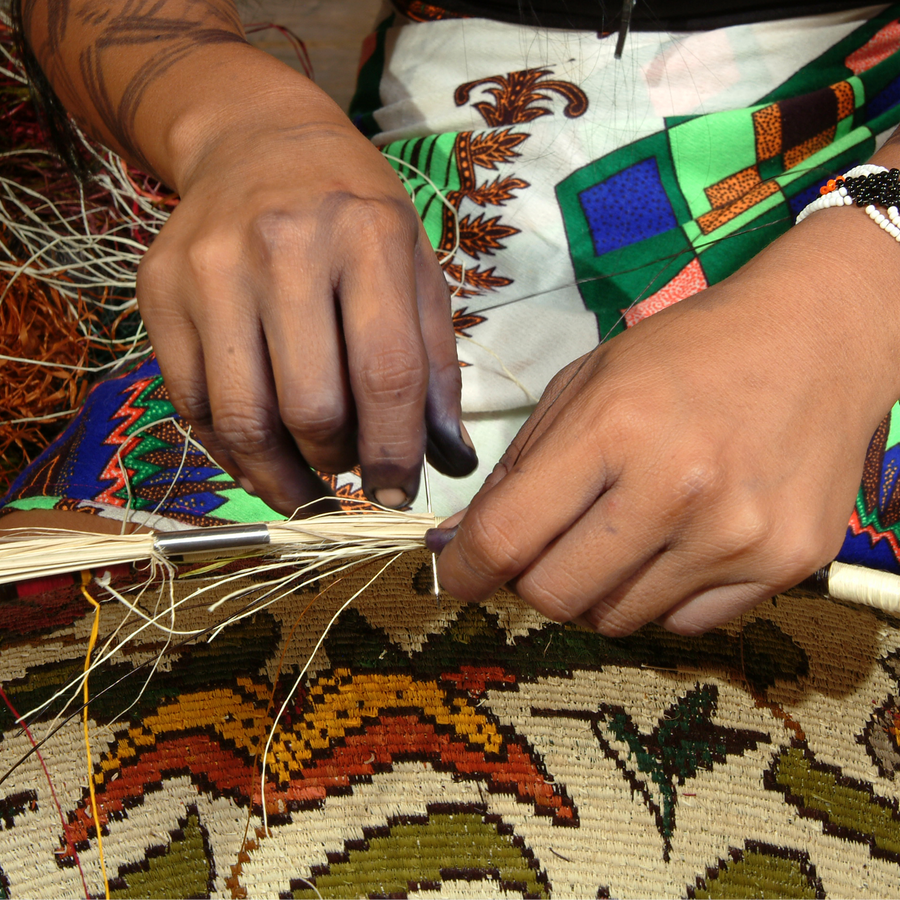
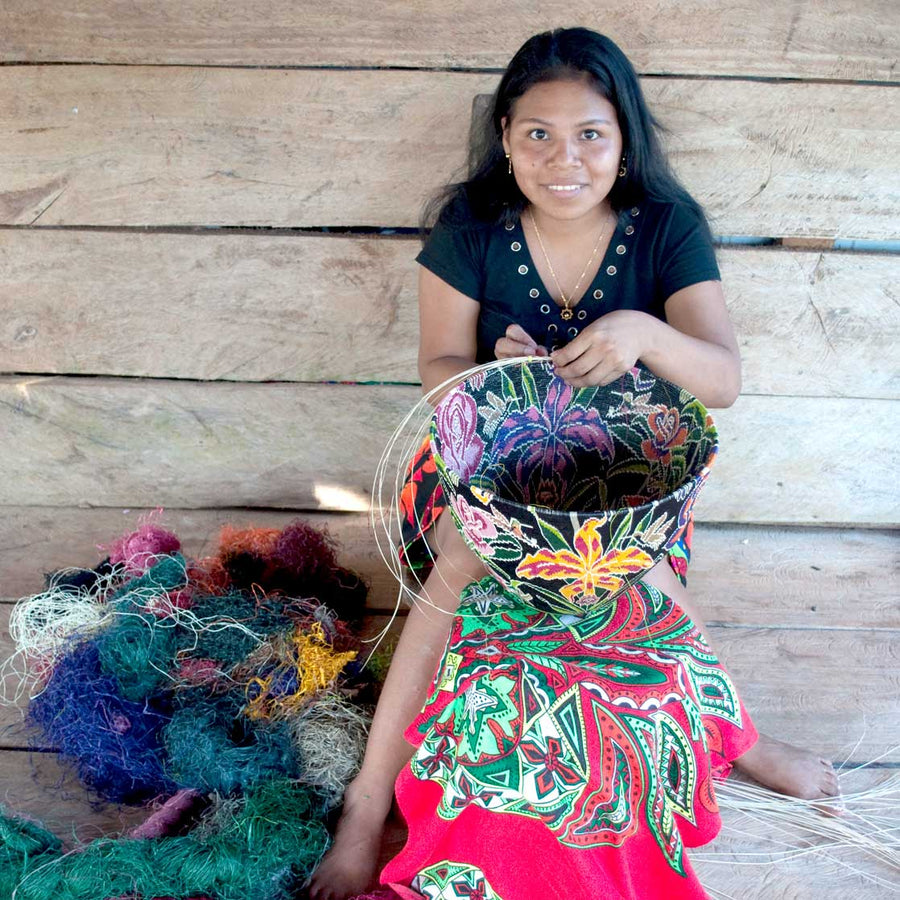
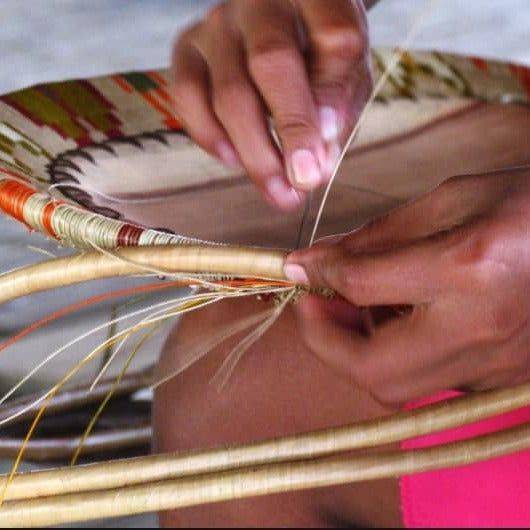


Colombian Werregue baskets are handwoven by the Wounaan people of the Chocó — Colombia's Pacific rainforest coast. Colombian pieces use a thicker coil and longer stitch than their Panama counterparts, producing a bolder, more sculptural presence. Geometric patterns draw from pre-Columbian body painting and ceramics.
Colors come entirely from the Chocó's plant life — achiote seeds, jagua fruit, turmeric root, tree bark. Roughly 30–40% of pieces incorporate copper wire, an innovation from weavers displaced to Bogotá. Each listing notes whether copper is included.
Commonly Asked
A tightly coiled basket woven by Wounaan Indigenous artisans. The Wounaan live in two regions: Panama's Darién rainforest and Colombia's Chocó Pacific coast. Both traditions are represented in this collection. Panama pieces are known as hösig di, Colombian pieces as werregue baskets.
Panama hösig di baskets use chunga palm (Astrocaryum standleyanum) coiled over a core of nahuala (Carludovica palmata), with ultra-fine stitching so tight the baskets hold water. Colombian werregue baskets use werregue palm fiber from the Chocó, with a thicker coil and bolder geometric forms. Some Colombian pieces also incorporate copper wire. The color palettes and design traditions differ between the two regions.
Panama baskets: a finely stitched piece takes several months, and the most detailed large baskets take close to a year. Master weavers pack 60 to 90 strands of chunga into every inch of coil. Colombian werregue: smaller pieces take weeks, mid-size baskets take one to several months, and the largest works can take the better part of a year.
Entirely from plants. Panama weavers use private dye recipes passed through families. Colombian weavers color werregue fiber with achiote, jagua, turmeric, and bark. No synthetic dyes are used in either tradition.
Yes. I buy directly from the weavers and their families in both Panama and Colombia. In Panama, a long-running deposit system covers housing, school supplies, medical costs, and daily needs for the weaving families I work with. This has been in place for more than 14 years.
No. Every piece is one of one. Once a basket sells, it is gone. I never restock because no two baskets are identical.
Dust with a soft, dry cloth. Keep out of direct sunlight and away from moisture to protect the natural plant dyes. Copper-wrapped Colombian pieces will develop a warm patina naturally over time. These baskets are meant to be displayed and enjoyed for years.
Orders ship within 1 to 3 business days with free shipping in the continental US. Returns are accepted within 14 days of delivery in original condition.